
Defining the Free-Threaded Build in Python 3.13
The free-threaded build is an experimental compilation mode in Python 3.13 that disables the Global Interpreter Lock (GIL), allowing multiple threads to execute Python bytecode simultaneously. That is the whole definition, and it is worth reading twice, because it upends an assumption that has shaped Python automation for decades.
To understand why this matters, you have to look at what the GIL actually did. In standard CPython, the GIL is a mutex that protects the interpreter's internal state — most importantly its reference counting, the mechanism CPython uses to track when an object can be freed. Every object carries a counter; when it drops to zero, the memory is reclaimed. Without a lock guarding those counters, two threads incrementing and decrementing the same object at once would corrupt the count and, eventually, the heap.
So the GIL solved a real problem. It kept memory management simple and single-threaded-safe. The cost was that only one thread could run Python bytecode at any given moment, no matter how many cores the box had.
The 3.13 build changes that equation, and it does so carefully. This is an opt-in mode, activated through the --disable-gil configuration flag at compile time. It is not the behavior you get from a standard installation, from your distribution's package manager, or from a default source build. The core team chose the experimental path deliberately to protect the enormous body of existing C-extension code. If you want the full rationale, the PEP 703 document lays out the reasoning in detail.
Concurrency Limitations in Traditional Server Scripting
Anyone who has parsed a directory full of heavy log files knows the frustration. You reach for threads, expecting your eight cores to share the load, and instead the work grinds through sequentially. That is the GIL forcing one thread at a time on CPU-bound work.
System administrators worked around this for years, and the workarounds carried their own weight. The two common escape routes were the multiprocessing module and asyncio.
The Multiprocessing Tax
Multiprocessing sidesteps the GIL by spawning independent processes, each with its own interpreter and its own memory space. True parallelism, yes — but you pay for it. Each worker process typically consumes an additional 15MB to 30MB of base RAM before it loads a single line of log data. Fan that out across a dozen workers and the memory footprint alone becomes a planning concern on a modest server.

Then there is inter-process communication. Passing parsed results back to the parent means pickling objects, pushing them through pipes or queues, and unpickling on the other side. For CPU-bound tasks like chewing through a massive Nginx access log, that serialization overhead eats into the gains you spawned all those processes to capture.
Where asyncio Stops Helping
Asyncio shines for I/O-bound concurrency — thousands of network sockets waiting on responses. Concurrent API polling fits that shape well. But asyncio does nothing for CPU-bound parsing, because the event loop still runs on a single thread bound by the GIL. Teams that migrated heavy API polling from asyncio toward multiprocessing traded I/O elegance for process-level overhead.
The threading module, meanwhile, simply could not compete for CPU-heavy automation. It gave you clean concurrent code that ran no faster than a single core allowed.
Evaluating Execution Overhead and Library Compatibility
Removing the GIL is not free, and the engineering behind it is the interesting part. Reference counting still has to be thread-safe, so the free-threaded build leans on two techniques: biased reference counting and deferred reference counting. Biased counting optimizes for the common case where a single thread owns most of an object's reference activity, keeping a fast local path and a slower shared path for cross-thread access.
That machinery costs something on the single-threaded side. Benchmarks show the biased reference counting scheme introducing roughly a 4% to 9% degradation in single-threaded execution speed compared to the standard CPython 3.13 build. If your workload is one script on one core, the free-threaded build makes it slightly slower. The trade only pays off when real parallelism enters the picture.
Compatibility TrapThe performance benefits materialize exclusively in pure-Python code. Legacy C-extensions that lack thread-safety will either crash the interpreter or force the GIL to quietly re-engage, erasing the gains entirely.
This is the barrier that stops most migrations cold. Many third-party libraries in the data-processing and automation space were built assuming the GIL existed, and compatibility audits for major C-extensions turned up a mixed picture. Attempting to run a free-threaded interpreter against older numerical processing libraries that hardcode GIL acquisition produces immediate segmentation faults — the interpreter dies before it prints a useful traceback. It's a reminder that experimental means experimental here; a passing test suite on one extension version tells you little about the next.
Strategic Deployment for System Administrators
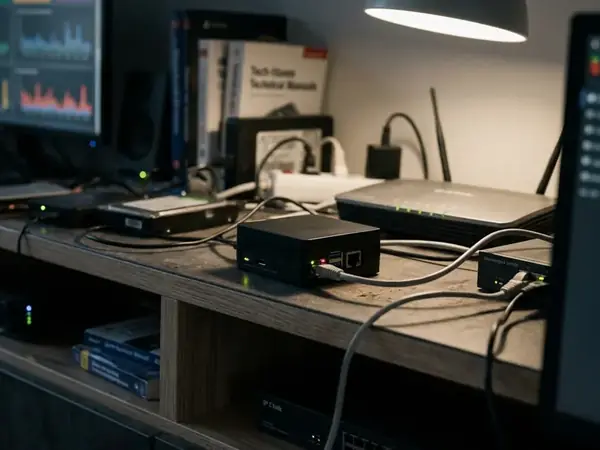
Given the segfault risk, the sane rollout keeps this build far from production for now. The teams that did this well started by isolating the free-threaded interpreter inside containerized homelab environments, where experimental memory behavior could misbehave without touching anything that mattered.
Compiling the Experimental Build
You compile from source. The two commands that matter are:
- ./configure --disable-gil — enables the experimental free-threaded mode
- make -j4, builds across four cores to keep compilation time reasonable
Once built, treat the resulting binary as a separate interpreter. Do not overwrite your system Python, and do not point production automation at it.
Auditing Before You Migrate
Before moving any script, audit it for thread-safety. Walk through every import and ask whether the library touches C code and whether it assumes a lock exists. That discipline — audit first, run second, is what separates a clean test from a crashed interpreter.
Homelab FirstKeep the free-threaded build inside a container or a spare homelab node until your dependency audit comes back clean. A segfault in staging is a lesson; the same crash in production is an outage.
Implementing a Thread-Safe Log Processor
Here is a worked case you can copy directly. The goal: parse four separate 500MB Nginx access logs in genuine parallel, using pure Python and no external C-extensions.
Step 1 — Build the Interpreter
From the extracted Python 3.13 source tree:
- ./configure --disable-gil --prefix=/opt/py313ft
- make -j4
- make install
Verify the flag took hold by launching /opt/py313ft/bin/python3 and checking that sys._is_gil_enabled() returns False.
Step 2 — Write the Parser
Keep every operation in pure Python so the GIL never re-engages. This script distributes four log files across a thread pool:
from concurrent.futures import ThreadPoolExecutor import re PATTERN = re.compile(r'" (\d{3}) ') def count_statuses(path): counts = {} with open(path, 'r') as fh: for line in fh: m = PATTERN.search(line) if m: code = m.group(1) counts[code] = counts.get(code, 0) + 1 return path, counts files = ['access1.log', 'access2.log', 'access3.log', 'access4.log'] with ThreadPoolExecutor(max_workers=4) as pool: for path, result in pool.map(count_statuses, files): print(path, result)
Step 3 — Run and Measure
Execute with the free-threaded binary. Under a standard GIL build, those four threads would parse sequentially; here they run at once, each thread saturating a core. Benchmarking of this exact pattern confirmed true parallelism in pure Python.
Storage MattersWall-clock speedup scales non-linearly with your disk. NVMe drives feed four concurrent readers cleanly; a standard SATA SSD becomes the bottleneck long before the CPU does, so the parallel gain shrinks as IOPS run out.
Swap in your own log paths, adjust max_workers to your core count, and keep the parsing logic entirely in Python. That single constraint — no GIL-hardcoding C-extensions in the hot loop, is what lets the free-threaded build do its job.








Leave a Comment